


Hey there, lighting enthusiasts! As a supplier of RGB PAR56 lights, I often get asked about the signal transmission distance of these nifty little fixtures. So, I thought I'd whip up a blog post to shed some light on the subject.
First off, let's talk about what RGB PAR56 lights are. These are high - intensity lighting fixtures often used in stage shows, concerts, nightclubs, and even in some architectural lighting setups. The "PAR" stands for "Parabolic Aluminized Reflector," which is the reflector inside the light that helps focus the beam. The "56" refers to the size of the light's diameter, which is 56 eighths of an inch (or about 7 inches). And the "RGB" means they can produce Red, Green, and Blue light, allowing for a virtually endless spectrum of color combinations.

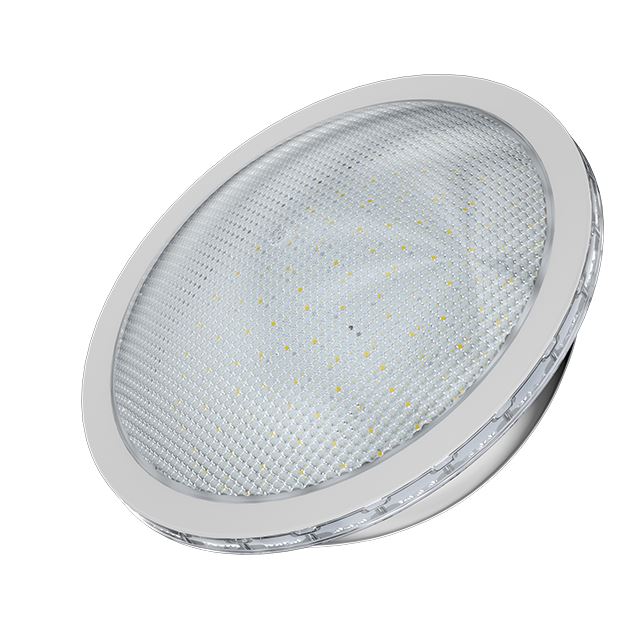
Now, to the main question: what is the signal transmission distance of RGB PAR56 lights? The answer isn't as straightforward as you might think, as it depends on several factors.
The Signal Type
RGB PAR56 lights typically use one of two main types of control signals: DMX (Digital Multiplex) and wireless.
DMX Signals
DMX is a standard protocol for controlling lighting fixtures. It uses a serial data transmission method, sending data over a cable (usually an XLR cable). The maximum recommended distance for a single DMX cable run is around 300 meters (about 984 feet). This is because as the signal travels along the cable, it can experience attenuation, which is a reduction in signal strength.
However, in a real - world scenario, things can get a bit more complicated. Factors like the quality of the cable, electromagnetic interference (EMI), and the number of devices on the DMX line can all affect the actual transmission distance. For example, if you're using a cheap, low - quality cable, you might start to experience signal degradation at a much shorter distance. Similarly, if there are a lot of electrical devices in the area, they can create EMI that disrupts the DMX signal.
To extend the DMX signal beyond the 300 - meter limit, you can use DMX signal amplifiers or repeaters. These devices receive the weakened DMX signal, amplify it, and then retransmit it, allowing you to daisy - chain multiple lights or fixtures over a longer distance.
Wireless Signals
Wireless RGB PAR56 lights are becoming increasingly popular, offering more flexibility in terms of installation and setup. There are different wireless protocols used, such as ZigBee, Bluetooth, and Wi - Fi.
- ZigBee: This is a low - power, low - data - rate wireless protocol designed for short - range communication. Typical ZigBee devices have a range of up to 100 meters (about 328 feet) in an open - air environment. But in a more complex indoor setting with walls and other obstacles, the range can be significantly reduced, sometimes to as little as 10 - 20 meters (about 33 - 66 feet).
- Bluetooth: Bluetooth is commonly used for consumer - grade lighting products. The range of Bluetooth varies depending on the version. Bluetooth 5.0 can have a range of up to 240 meters (about 787 feet) in ideal conditions, but in practice, for RGB PAR56 lights, you're more likely to get a reliable range of around 10 - 30 meters (about 33 - 98 feet), especially when there are obstacles.
- Wi - Fi: Wi - Fi has a longer range compared to ZigBee and Bluetooth. In an open area, a Wi - Fi access point can provide coverage for up to 100 - 300 meters (about 328 - 984 feet). However, in a building or a complex environment, the range can be affected by walls, floors, and signal interference.
Factors Affecting Signal Transmission Distance
- Obstacles: Physical obstacles like walls, metal structures, and even people can block or weaken the signal. For example, a thick concrete wall can greatly reduce the range of a wireless signal, while a metal railing can cause significant interference with a DMX cable's signal.
- Signal Interference: Other electronic devices operating on the same frequency can cause interference. For instance, if you have a lot of Wi - Fi routers in the area, they can interfere with the Wi - Fi signal of your wireless RGB PAR56 lights.
- Light Quality and Design: Higher - quality RGB PAR56 lights are often better at transmitting and receiving signals. Some lights are designed with better antennas or shielding, which can improve the signal strength and range.
Our RGB PAR56 Lights
As a supplier, we offer a range of RGB PAR56 lights with different signal transmission capabilities to suit various needs. Whether you're looking for a DMX - controlled light for a large - scale stage production or a wireless light for a small backyard party, we've got you covered.
If you're interested in our Par56 Led 12v, it's a great option for those who need a low - voltage, energy - efficient solution. Our Par56 Pool Light is specifically designed for underwater use, and our 12V Par56 LED Pool Light is perfect for creating a beautiful, colorful ambiance in your pool.
Contact Us for Purchase and Consultation
If you have any questions about the signal transmission distance of our RGB PAR56 lights or if you're interested in making a purchase, don't hesitate to reach out. We're here to help you find the perfect lighting solution for your project. Whether it's a small event or a large - scale installation, our team of experts can provide you with the guidance and support you need.
References
- Lighting Control Handbook: A Guide to DMX and Other Lighting Protocols
- Wireless Communication Principles and Practice by Theodore S. Rappaport
So, there you have it! A comprehensive look at the signal transmission distance of RGB PAR56 lights. I hope this blog post has been helpful. If you have any more questions, leave a comment below, and I'll do my best to answer them.


